
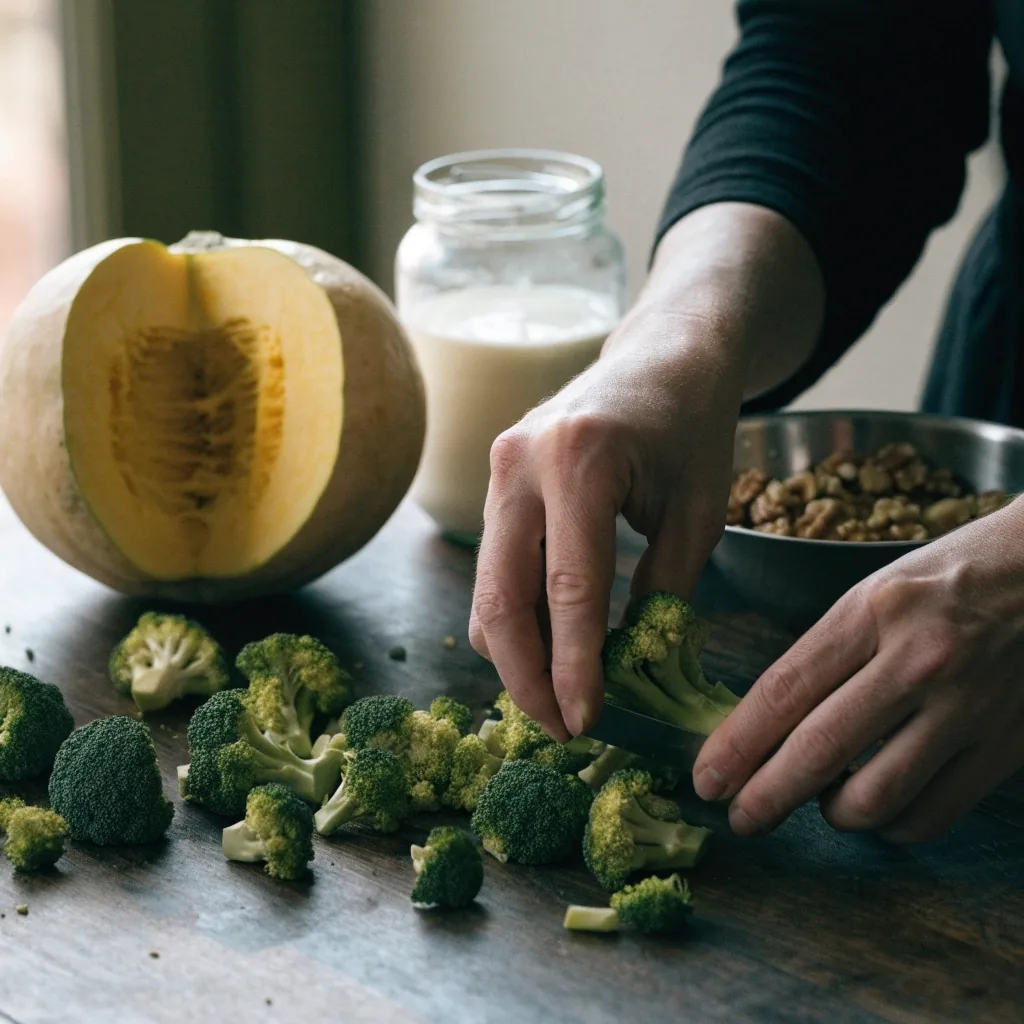
Autumn into winter · everyday food planning
Seasonal foods worth planning around
French food writing has a predictable rhythm in autumn and winter. Lists appear, temperatures drop, and the same vegetables and pantry items get recommended again. This page collects that material and turns it into something you can plan a week around, with notes on when each food is at its best and how it usually gets cooked. It's about shopping and cooking, not about promises.
The editorial pattern
What October coverage tends to highlight
A French seasonal list published in October put forward ten foods to prioritise before winter. Concrete items, a seasonal reason, an everyday use — a useful template for building your own list.
Broccoli, squash, nuts and oily fish were among the autumn picks — and the piece linked broccoli and citrus to vitamin C intake while keeping the framing around seasonal shopping.
Broccoli through the cold months
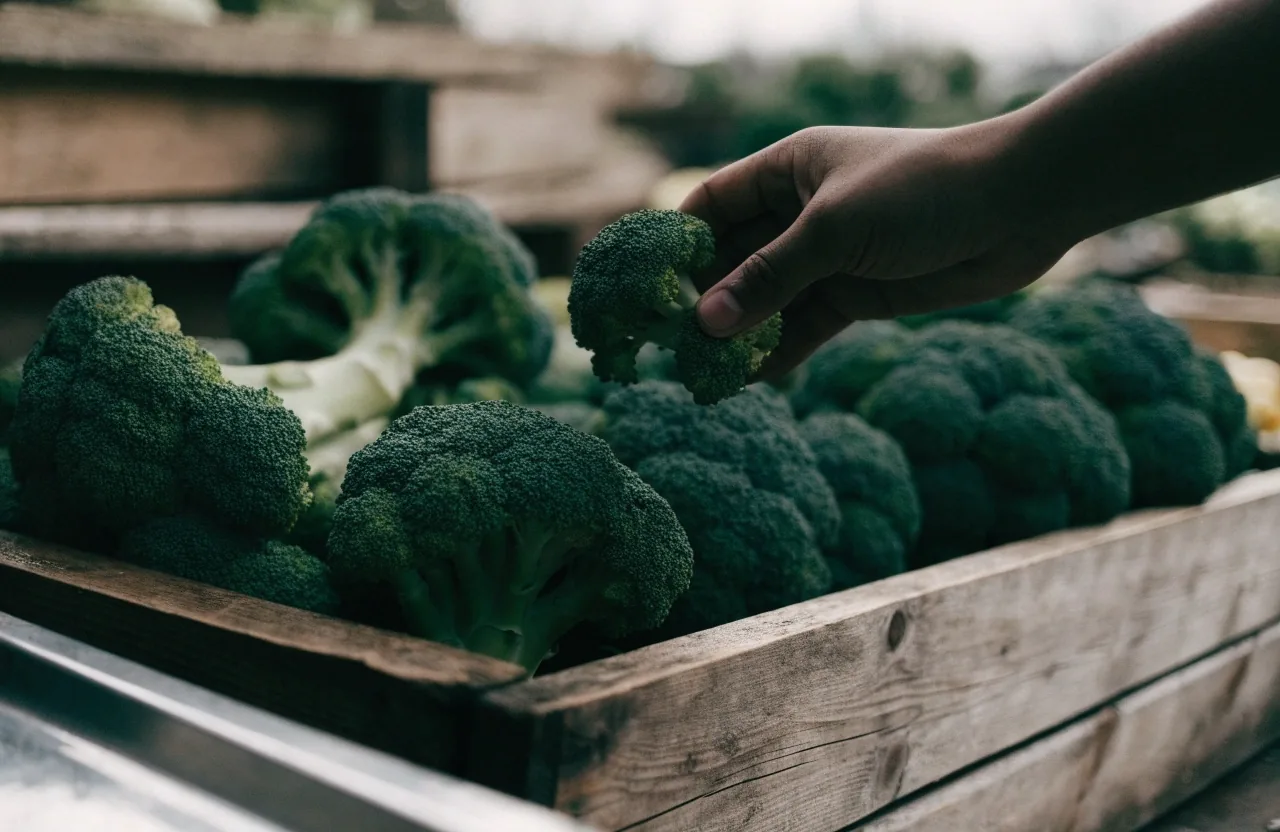
Broccoli earns its place because it holds up across the whole cold season. It's highlighted for vitamin C content, it cooks in minutes, and it tolerates freezing better than most green vegetables. Roast it with oil and salt, steam it and dress it while warm, or stir-fry it with garlic.
If you buy it fresh, aim for tight, dark heads and firm stalks. If the stalks are woody, peel them before cooking — the interior stays tender and the bitterness goes with the peel. A single head covers two generous portions, so it fits a week's plan without much thinking.
-
Roast
Oil and salt, hot oven, cut side down until the edges catch.
-
Steam
Dress while warm with olive oil, lemon and a pinch of flaked salt.
-
Stir-fry
Garlic first, florets after, a splash of water to finish the stalks.
Stores well, cooks simply
Squash and root vegetables as the base
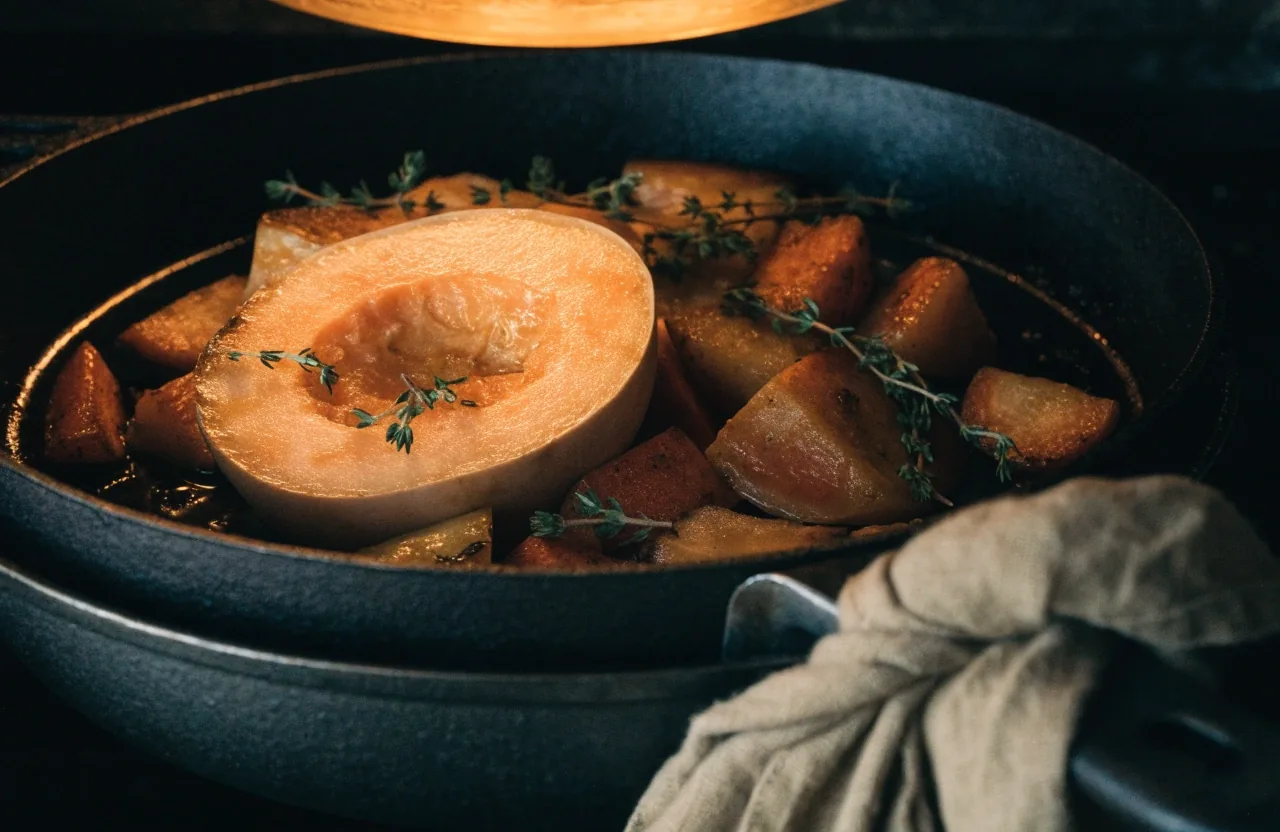
Squash appears in nearly every autumn roundup for the same practical reasons: it stores well, it's filling, and it works in soups, gratins and tray bakes without much skill.
Pair it with lentils for a main dish, or roast it alongside other roots and dress with olive oil and herbs. The seasonality note is simple: buy it when it's cheap, which in France usually means late autumn through winter.
- Store
- Whole squash keeps for weeks in a cool, dark place — no fridge needed until it's cut.
- Pair
- Lentils for a main, or roasted roots dressed with olive oil and dried herbs.
- Season
- Late autumn into winter, when the price drops and the flavour is at its sweetest.
The shelf side
Nuts and oily fish for the pantry side
Nuts and oily fish carry the part of the seasonal list that doesn't live in the vegetable drawer. Both are commonly included in French food coverage for their nutrient profile, and both keep well, which makes them easy to work into a weekly routine.
A handful of nuts as a snack
Walnuts, almonds and hazelnuts keep for months in a sealed jar. They sit in the same row of the pantry as dried fruit, so the snack shelf becomes the fallback when the fridge is thin.
Keeps for months, sealed
Oily fish once or twice a week
That's the sort of pattern that turns up in mainstream advice rather than only in specialty writing. Tinned sardines or mackerel count, and they cost less than the fresh counter.
Canned counts, week to week
Citrus and vitamin C in winter
Citrus shows up in the same lists for the same reason as broccoli: vitamin C. Winter is the season when oranges, clementines and lemons are cheap and good in France, which makes them the least complicated way to keep some vitamin C in the diet when fresh vegetable variety drops.
After lunch
A clementine after lunch is the simplest habit on this page — no prep, no cooking, and the fruit is at its best in December and January.
With fish
Lemon on fish is a French kitchen reflex. It bridges the pantry-side chapter and the citrus chapter in the same plate.
In a salad
Orange segments over bitter leaves, olive oil, salt. None of this is elaborate and it survives a cold week's shopping.
Pantry foods that carry you through
When fresh produce is thin or expensive, the pantry does more work. Lentils, beans, chickpeas, tinned tomatoes, frozen spinach and nuts cover a lot of ground.
Lentils in particular appear in French immune-food guides as an everyday food, often grouped with other legumes as plant sources of iron and zinc. They're reliable, they're affordable, and they keep for months.
- Lentils Grouped with other legumes in French guides as a plant source of iron and zinc. Simmer with a bay leaf, dress warm with mustard and oil.
- Beans & chickpeas Tinned or dried, they carry a tray bake or a soup without meat. Rinse well if tinned, and keep a spare tin for thin weeks.
- Tinned tomatoes The base of half the winter meals you'll cook. A tin, an onion, olive oil and dried herbs is already dinner.
- Frozen spinach Cheaper than fresh in winter, and the flavour holds in pies, omelettes and soups. Keep a bag in the freezer door.
- Nuts & seeds Sealed jars, a small bowl on the table. The simplest snack shelf in the house and the one that survives a busy week.
How to build a week around this
The practical version is a weekly pattern rather than a daily rule. Pick a vegetable base, add a legume or a grain, and finish with something from the pantry: nuts, seeds, olive oil, herbs. Rotate the vegetables through the season.
A note on the seasonal angle below — it's a shopping strategy, not a rule you're meant to obey when it stops making sense.
-
Step 1
Pick a vegetable base
Broccoli, squash or roots. Buy what's cheap in the week you're shopping, not what the list said in September.
-
Step 2
Add a legume or grain
Lentils, chickpeas, rice, barley — whichever is already in the cupboard. This is where a tray bake or a soup becomes a main.
-
Step 3
Finish from the pantry
Nuts, seeds, olive oil, dried herbs. It's the layer that turns the same vegetables into a different meal twice in a week.
-
Step 4
Rotate through the season
Swap the vegetable every week or two as the market changes, and keep the pantry layer constant. Simple to keep up with.
Where seasonality stops being useful
There's a limit to how far seasonal planning should go. Not every nutrient is seasonal, and not every fresh item is better than its frozen equivalent. Frozen broccoli and spinach are nutritionally reasonable and often cheaper in winter.
The seasonal angle is a shopping strategy, not a doctrine. Use it when it saves money or improves what you cook, and ignore it when it doesn't. If you want a reference for individual items and their preparation notes, the food library covers them one by one.
Questions readers ask about seasonal planning
Short, practical answers — no claims beyond what a food-frequency guideline can honestly say.
Which autumn ingredients come up most in French immune-food lists?
Broccoli, squash, nuts and oily fish are the recurring names, often alongside citrus. The framing is seasonal shopping rather than any claim about outcomes.
Is fresh always better than frozen?
No. Frozen broccoli and spinach are practical and nutritionally reasonable, and they're often cheaper in winter. Fresh is worth it when the produce is actually good.
How often should I eat oily fish?
Mainstream French food coverage tends to suggest oily fish once or twice a week as a general pattern. That's a food-frequency guideline, not a therapeutic schedule.
Plan the week, not the outcome
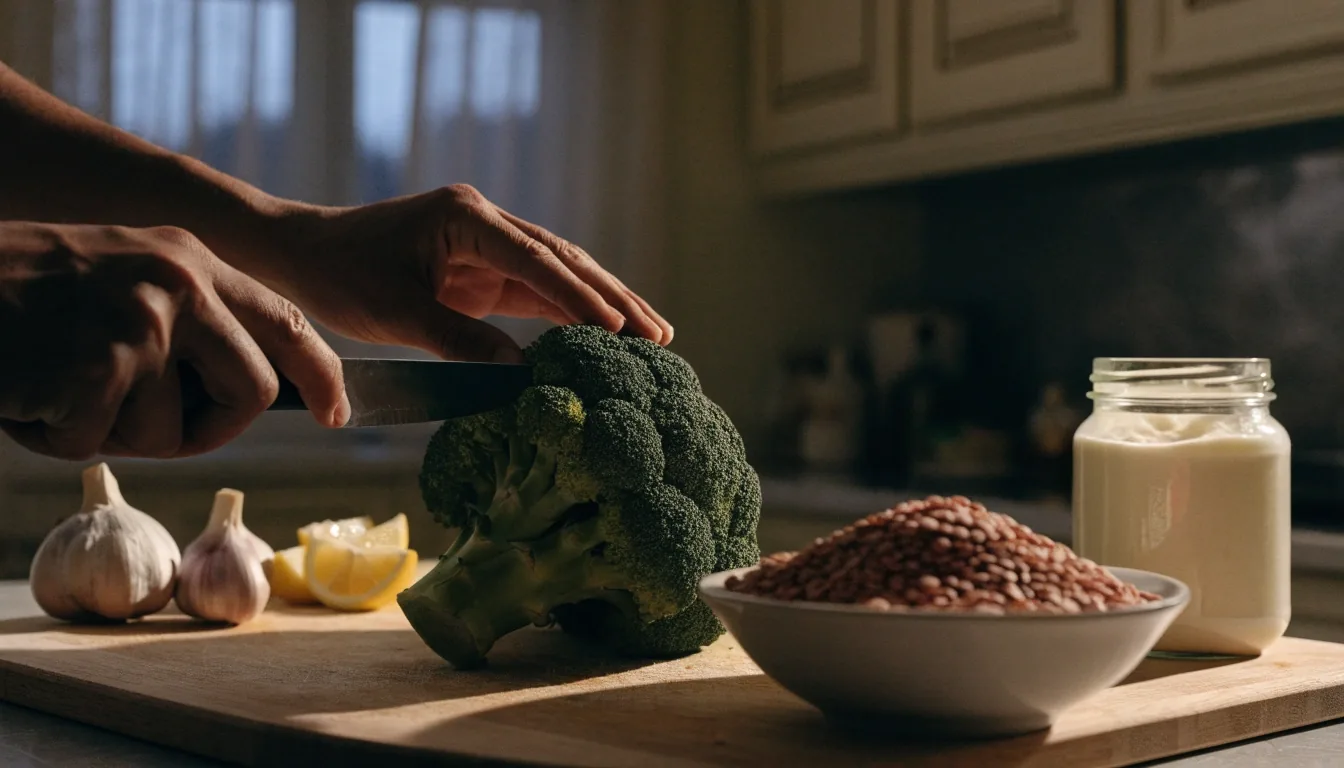
Seasonal shopping gives you a rhythm for the colder months — cheap vegetables, a pantry layer, citrus in winter. If you'd like to read the individual foods one by one, the food library is the place to start.
Skin Cleanse Rapid · 14 Rue de la Paix, 75002 Paris · [email protected]