
Nutrient basics
Everyday nutrients and the foods that carry them
This page explains the nutrients that come up most often when people talk about immune support, and lists the ordinary foods that tend to contain them. It is written for readers who want to understand what is on their plate rather than memorise numbers.
See seasonal foodsWhat this page covers, in order
Six nutrients and food groups come up again and again in everyday French food writing. Each one gets a short explanation of what it does in the diet and where it usually sits on a plate in France — no counts, no targets, just the names you keep running into.
Radio buttons below jump straight to the chapter you want. Everything is on this page.
| Nutrient | Food side in France | Jump |
|---|---|---|
| Vitamin C | Citrus, broccoli, peppers, kiwi, potatoes, leafy greens | Vitamin C |
| Zinc | Meat, shellfish, dairy, eggs, nuts, seeds, legumes | Zinc |
| Vitamin D | Oily fish, eggs, fortified dairy | Vitamin D |
| Fibre | Legumes, whole grains, vegetables, fruit | Fibre |
| Iron from plants | Lentils, beans, chickpeas, spinach, nuts, seeds | Plant iron |
| Live cultures | Yogurt, kefir, sauerkraut, miso, tempeh, kombucha, kimchi | Fermented foods |
Vitamin C
Vitamin C and where it actually lives
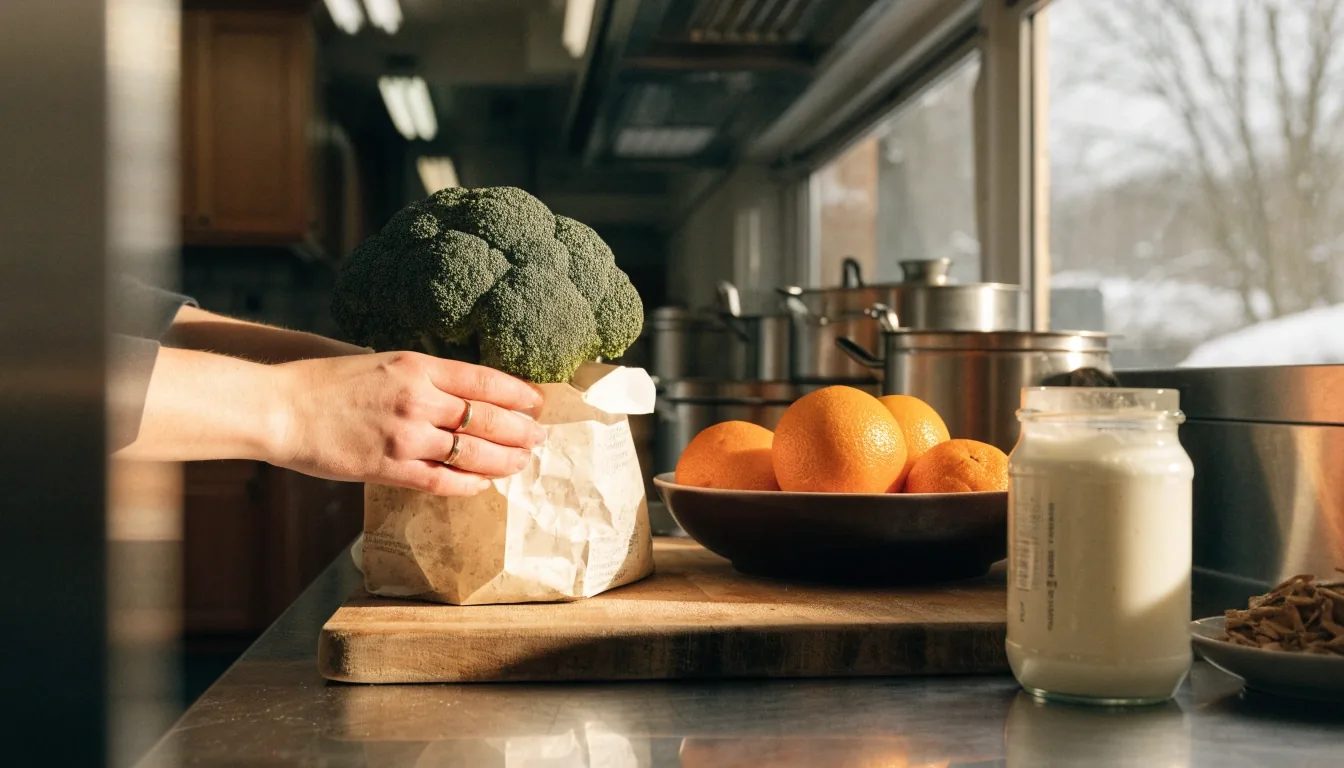
Vitamin C is the nutrient readers ask about first, and it is not hard to find. It sits in citrus, broccoli, peppers, kiwi, potatoes and many leafy greens. French seasonal coverage often pairs broccoli and citrus specifically, partly because both stay cheap through the cold months.
The practical point is variety in winter rather than scarcity. If vegetables and fruit are part of the day, vitamin C largely takes care of itself; the real challenge is keeping the choices wide when the market narrows, which is where frozen vegetables and citrus earn their place.
Browse the food library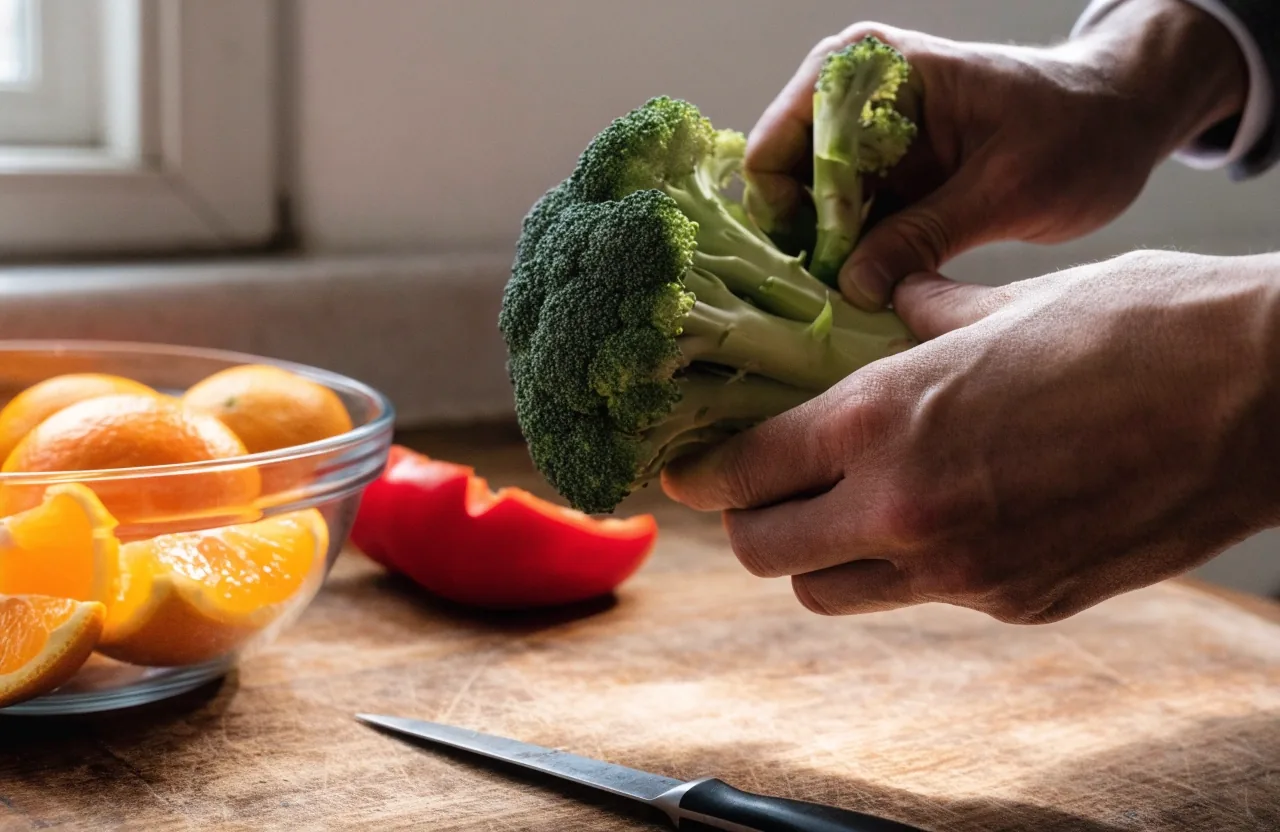
A note on this guide
Food first, with the honest edges left visible.
Where a nutrient is mostly a food question, we say so. Where it is really a conversation for a doctor or pharmacist, we say that instead. Nothing on this page replaces medical advice, and nothing here asks you to count grams or track intakes.
Zinc
Zinc in animal and plant foods
Zinc appears in meat, shellfish, dairy, eggs, nuts, seeds and legumes. Plant sources like lentils, beans and chickpeas are grouped together in French food guides as useful everyday options — and they are the ones most readers can act on without changing where they shop.
Absorption from plant foods is lower than from animal sources. That is a detail worth knowing, not a reason to avoid them. Combining legumes with vitamin-C-rich vegetables is the standard practical approach, and it happens to be how a lot of French cooking already works.
Animal sources
Meat, shellfish, dairy and eggs carry zinc in a form the body takes up more readily. In French cooking that is often a main dish rather than a side.
Absorption: higher of the two groups
Legumes
Lentils, beans and chickpeas are the everyday plant route. They are cheap, they keep in the pantry, and they appear in ordinary French weeknight cooking rather than only in specialty aisles.
Absorption: lower — pair with vitamin C
Nuts and seeds
A handful added to a salad, a yogurt or a bowl of soup covers a category that otherwise goes missing in a lot of weekly menus.
Absorption: lower — pair with vitamin C
Vitamin D
Vitamin D and the food side of it
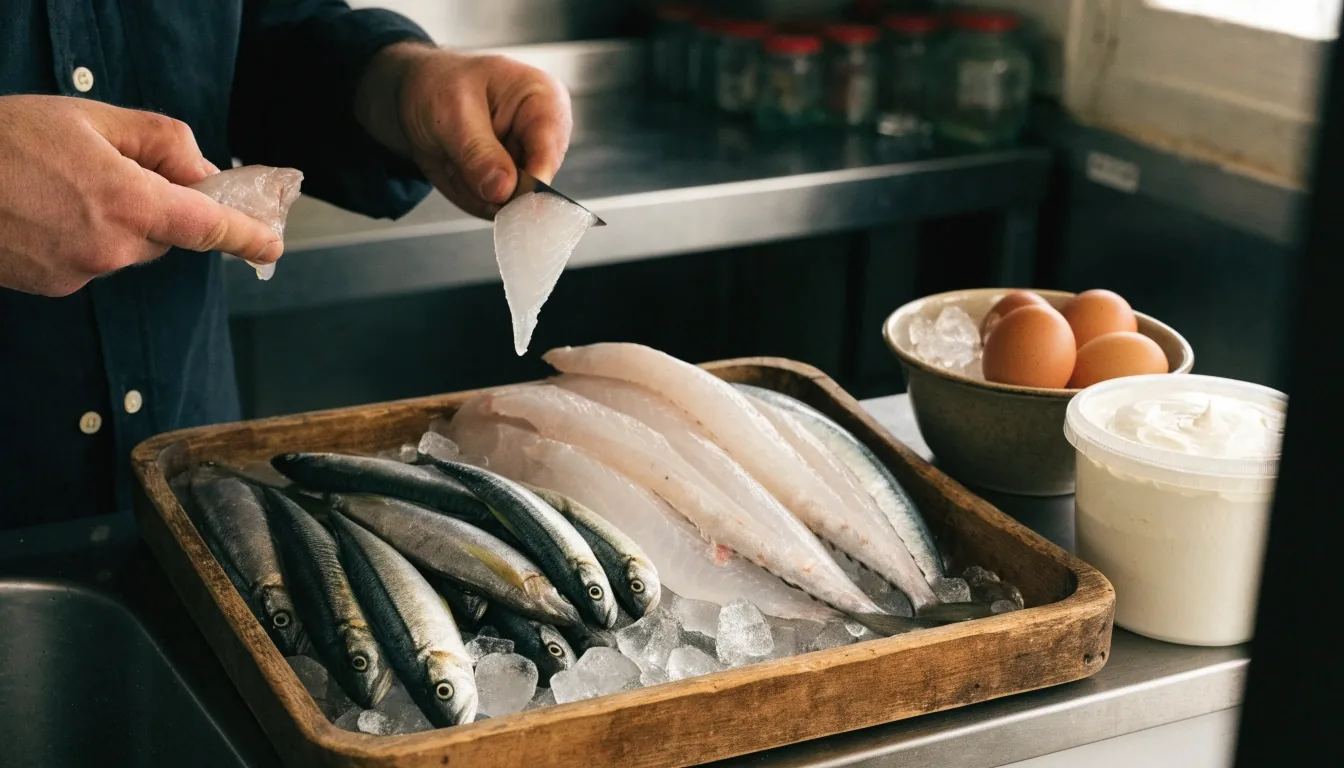
Vitamin D is the nutrient where food plays a smaller role than sunlight, and most French food writing says so plainly. Oily fish, eggs and fortified dairy appear on the food side of the conversation; the rest is a matter for a doctor or pharmacist, especially in winter when sun exposure drops.
This guide stays on the food side. It does not make recommendations about testing or dosing, because that belongs with someone who knows your situation. What it can do is point out which meals already carry vitamin D — herring, sardines, mackerel and salmon on a plate, an egg at breakfast, a fortified yogurt at the end of the day.
In winter, ask a pharmacist or a doctor about your situation rather than looking for the answer in a shopping list. The food side is useful; it is not the whole picture.
Fibre
Fibre, legumes and the gut connection
Fibre is not usually the headline nutrient in immune-support writing, but it sits underneath the fermented-food conversation constantly. Legumes, whole grains, vegetables and fruit all contribute to it. Lentils are a good example of an item that carries fibre, plant iron and zinc at once, which is why they keep turning up in mainstream French food coverage rather than only in specialty writing.
Legumes
Lentils, beans and chickpeas give fibre, plant iron and zinc in one ingredient, which is why they show up in three chapters of this page rather than one.
Whole grains
Brown rice, oats, rye bread and whole-wheat pasta carry fibre into meals that already exist in a French week: breakfast, a lunch bowl, a slice of bread with dinner.
Vegetables
Root vegetables, cabbage, leeks and greens add fibre to winter cooking without asking for a change of habit, which is when the seasonal market is thinnest.
Fruit
Apples, pears, berries and dried fruit add fibre along with the vitamin C that helps the plant iron in legumes and grains get taken up.
Plant iron
Iron from plant sources
Plant iron is the category most readers underestimate. Lentils, beans, chickpeas, spinach, nuts and seeds all contain it, and it is less easily absorbed than iron from meat. Pairing plant iron with vitamin C is the standard practical tip, and it happens naturally in dishes that already exist: lentil salad with lemon, spinach with peppers, a bean stew finished with a squeeze of orange.
If you are concerned about iron levels, that is a conversation for a healthcare professional. This page can tell you which foods carry it; it cannot tell you whether your levels are where they should be, and it would be wrong to pretend otherwise.
Live cultures
Fermented foods and live cultures
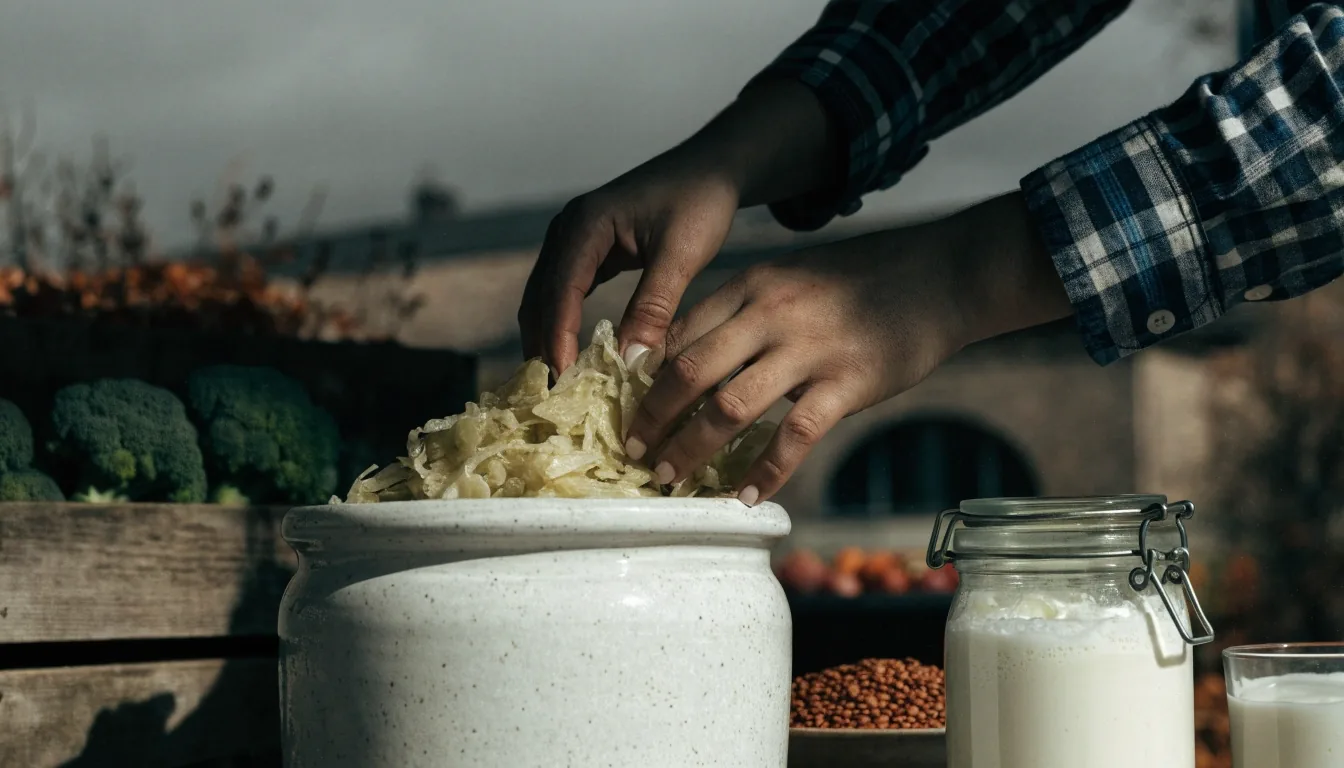
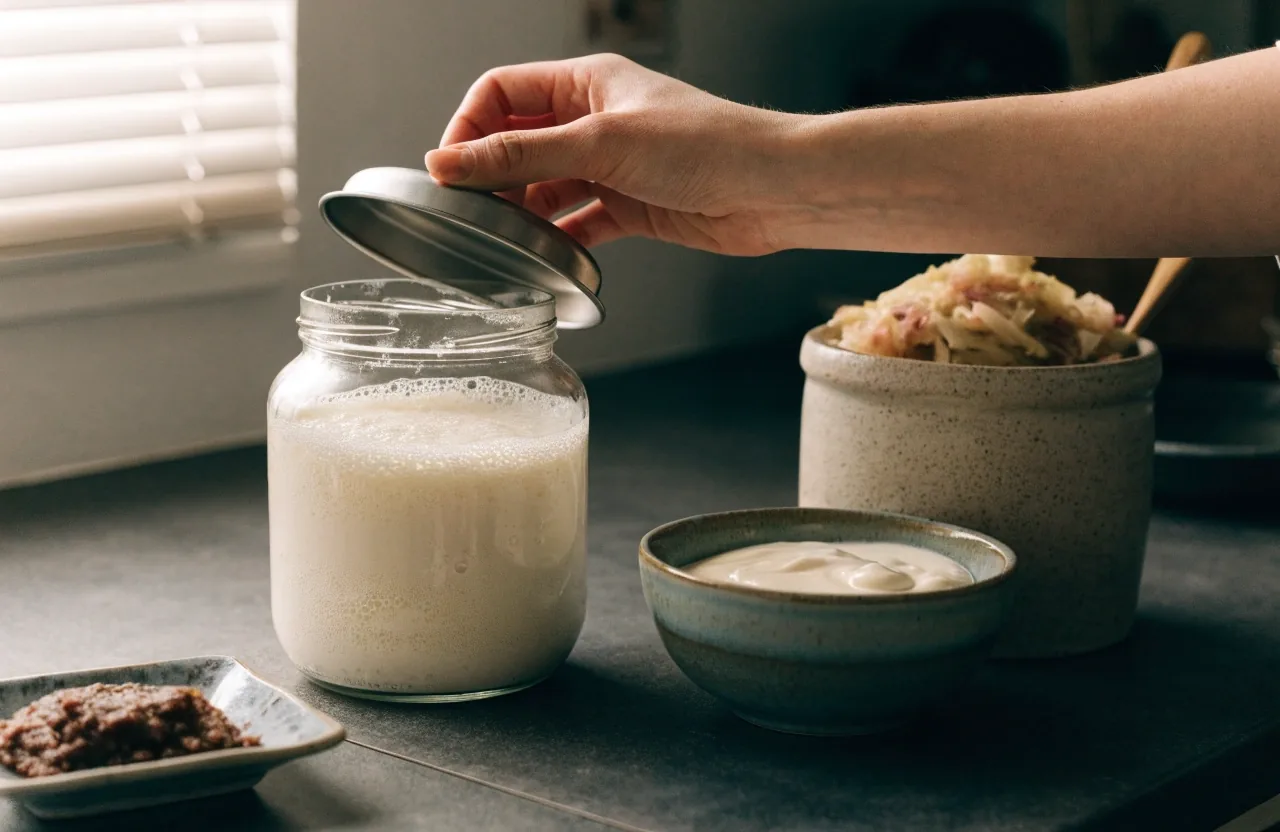
Fermented dairy and other fermented foods add a different category: live cultures rather than vitamins and minerals. Yogurt is the baseline in France, since it commonly contains Streptococcus thermophilus and Lactobacillus delbrueckii, the cultures required by regulation in all yogurts sold here.
Kefir, raw sauerkraut, miso, tempeh, kombucha and kimchi sit in the same conversation, with very different textures and salt levels. Our guide to fermented foods explains how they differ and which ones are easy to work into an ordinary week.
Read about fermented foodsHow these nutrients fit into a day
Nobody needs to track every nutrient individually, and a page that told you to would be a bad page. What works is a loose pattern: a vegetable or fruit at most meals, a legume several times a week, some nuts or seeds, oily fish once or twice, and fermented dairy or another fermented food regularly.
That covers most of what this page describes without any counting. The seasonal guide turns the same idea into a week-by-week shopping approach, built around what is actually cheap and good in the market right now.
-
A vegetable or fruit at most meals
This is where vitamin C and fibre land at the same time, and it is the single habit that does most of the work on this page.
-
A legume several times a week
Lentils, beans or chickpeas bring fibre, plant iron and zinc into the week. A lemon dressing alongside covers the vitamin C pairing.
-
Nuts or seeds most days
A small handful on a yogurt or a salad closes the zinc and plant-iron gap that an otherwise vegetable-heavy day can leave open.
-
Oily fish once or twice
Herring, sardines, mackerel or salmon put the vitamin D food side on the table without any effort beyond a shop.
-
Fermented dairy or another fermented food, regularly
Yogurt is the simplest version of this in France, and it is already part of how most people eat. Kefir, sauerkraut, miso or kimchi are variations on the same idea rather than separate projects.
Where food stops and supplements start
Food first is the approach here, but it is not a rule that fits everyone. Some people have dietary restrictions, absorption issues, or medical advice that changes the picture entirely. Supplements have their own labelling conventions and formats, and our comparison page describes them in plain terms so you can read a label without guessing.
Compare product labelsA food guide can
Name which nutrients matter in everyday eating, point to the ordinary foods that carry them, and explain how those foods fit into a normal French week.
A food guide cannot
Assess your levels, decide whether you need a supplement, or replace advice from a doctor or pharmacist. Anything involving a health condition belongs with a professional.
Questions readers send us most
Which everyday foods most often provide vitamin C?
Citrus, broccoli, peppers, kiwi, potatoes and leafy greens are the usual names in French food coverage. Winter is when citrus and frozen vegetables do the most work, simply because the fresh market narrows.
Do plant foods really provide zinc?
Yes. Lentils, beans, chickpeas, nuts and seeds contain zinc. Absorption is lower than from animal sources, which is a practical detail rather than a reason to skip them — pairing them with vitamin-C-rich vegetables is the usual approach.
Is food enough for vitamin D?
Oily fish, eggs and fortified dairy contribute, but sunlight is the main source. In winter, this is a topic for a doctor or pharmacist rather than a food guide, and that is where we leave it.
If you would rather start from what is in season than from a nutrient list, the seasonal guide builds the same idea week by week.
Skin Cleanse Rapid, 14 Rue de la Paix, 75002 Paris, France. Monday to Friday, 9:00 AM – 6:00 PM. Privacy Policy