
A cooking method first
Fermented foods in an everyday kitchen
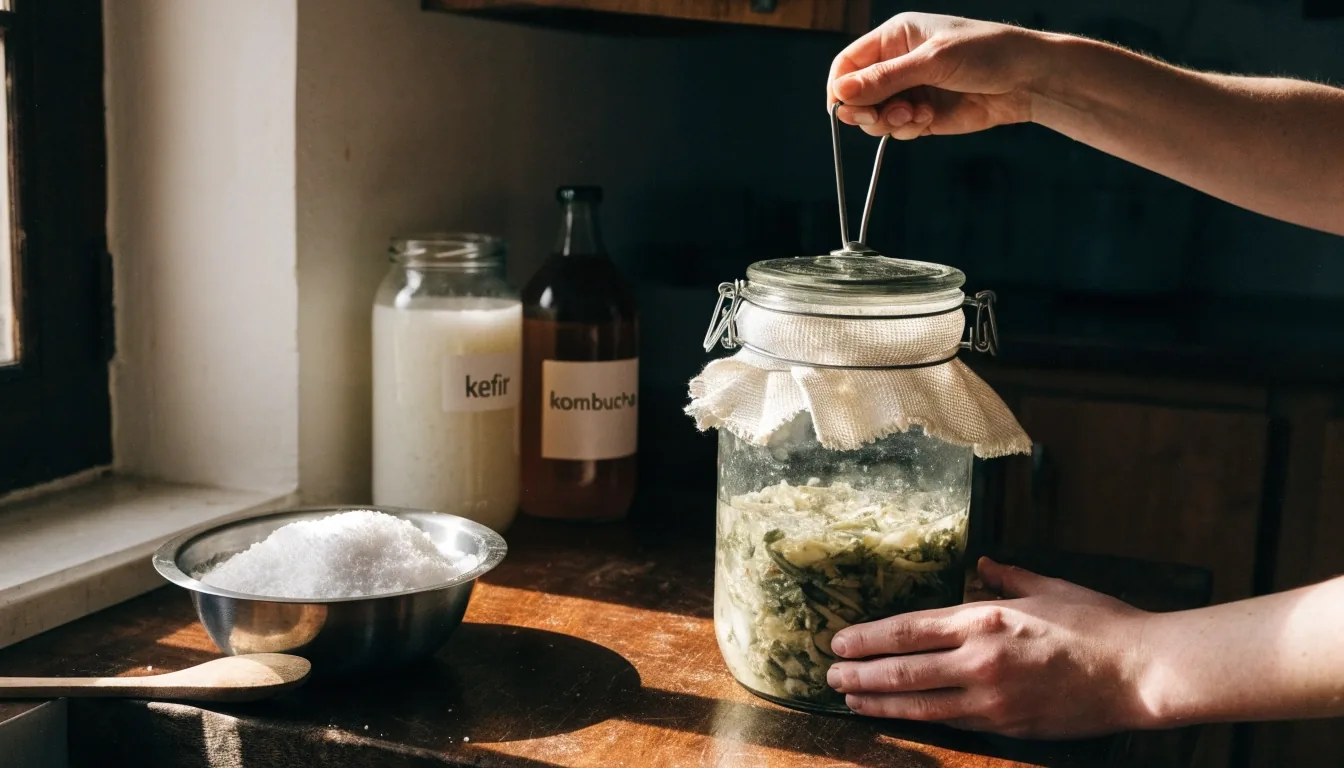
Yogurt, kefir, raw sauerkraut, kimchi, miso, tempeh, kombucha and aged cheese are all fermentations, and most of them sit in an ordinary French kitchen already. The practical question is simpler than it sounds: which of them still carry live cultures when you get them home, and which have been heat-treated on the way to the shelf.
What fermentation actually is
Fermentation uses microorganisms to transform food. Bacteria, yeasts or both break down sugars and other compounds, which changes texture, acidity and shelf life. That is how sauerkraut, yogurt, kefir, kimchi, miso, tempeh and kombucha come about in a kitchen.
The technique is old, but the versions you buy in a French supermarket are usually made with controlled cultures rather than wild ones. That is why two jars of the same vegetable can taste flatly alike one week and sharply different the next: the producer chooses the culture, the temperature and the length of the ferment.
Four things the process changes
- Acidity
- Lactic acid builds up as bacteria work through sugars. That tang is the ferment doing its job, not a sign the food has turned.
- Texture
- Cabbage softens and firms at once as salt draws water out of the cells. Milk thickens into yogurt because the cultures change its protein structure.
- Shelf life
- Acid and salt hold back spoilage organisms that would otherwise take over within days. This is preservation first, flavour second.
- Live cultures
- Some ferments keep living bacteria in the finished jar. Whether they survive to your plate depends on what happens after the ferment ends.
Fermented in origin, pasteurised on the shelf, and still labelled the same way. The label is where the difference lives.
Yogurt is the baseline
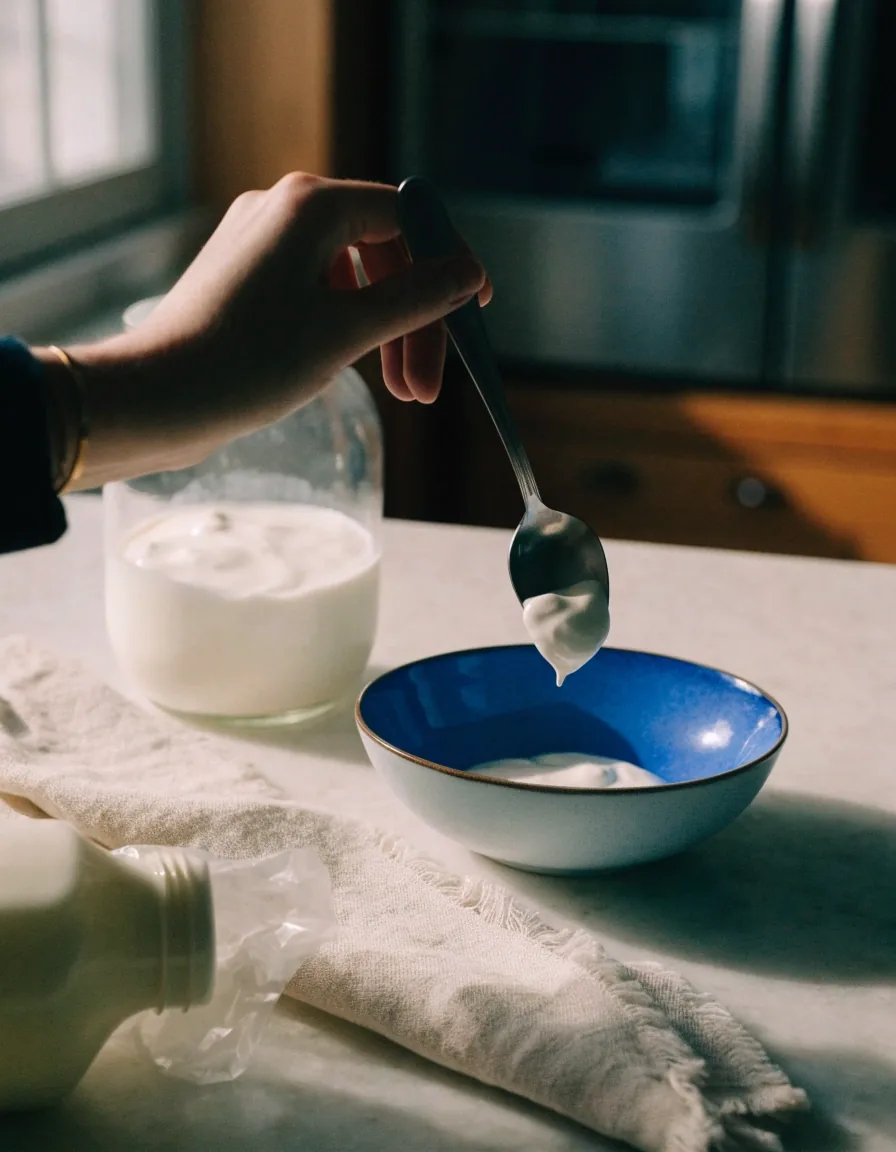
Yogurt is the simplest example in France, and it is regulated. It commonly contains Streptococcus thermophilus and Lactobacillus delbrueckii, cultures that are required by regulation in all yogurts. That means the basic version in any shop already qualifies as a fermented dairy product.
Flavoured and sweetened versions contain the same cultures, so the choice between plain and flavoured is about sugar and taste, not fermentation. If you are comparing cartons, read the sugar line rather than the culture names, because on this shelf the culture half of the label barely changes.
- 01 Plain, set or Greek-style: all fermented dairy, different in fa and texture.
- 02 Fruit at the bottom adds sugar, not more cultures.
- 03 Long-life yogurt in the warm aisle has usually been heat-treated after fermentation.
Kefir, the drinkable side
Milk kefir is the drinkable cousin of yogurt, and it appears alongside yogurt in French reference pages listing food sources of Lactobacillus, Bifidobacterium and S. boulardii. It is thinner, slightly tart, and used the same way as a morning drink or a base for smoothies.
Availability in France is decent in supermarkets and better in organic shops. If you have never tried it, start with a small bottle before committing to a litre.
Raw sauerkraut and kimchi
Raw sauerkraut and kimchi are vegetable fermentations, and the word raw matters. Raw sauerkraut is cabbage fermented in salt without heat treatment, which is what leaves living cultures in the jar. Kimchi follows the same principle with different seasoning.
Both are sold in French shops, and both are usually found in the chilled section rather than with shelf-stable pickles. That location on the shelf is a useful hint on its own.
Miso, tempeh, kombucha, aged cheese
Miso is a paste, typically stirred into soup or used in marinades, and it shows up in French roundups as a pantry item rather than a snack. Tempeh is a fermented soybean product with a firm texture, used in place of meat in some dishes.
Kombucha is a bottled, lightly fizzy fermented tea. Aged cheese is the category readers least expect, and it appears on French reference lists alongside the more obvious items.
Why pasteurisation changes the picture
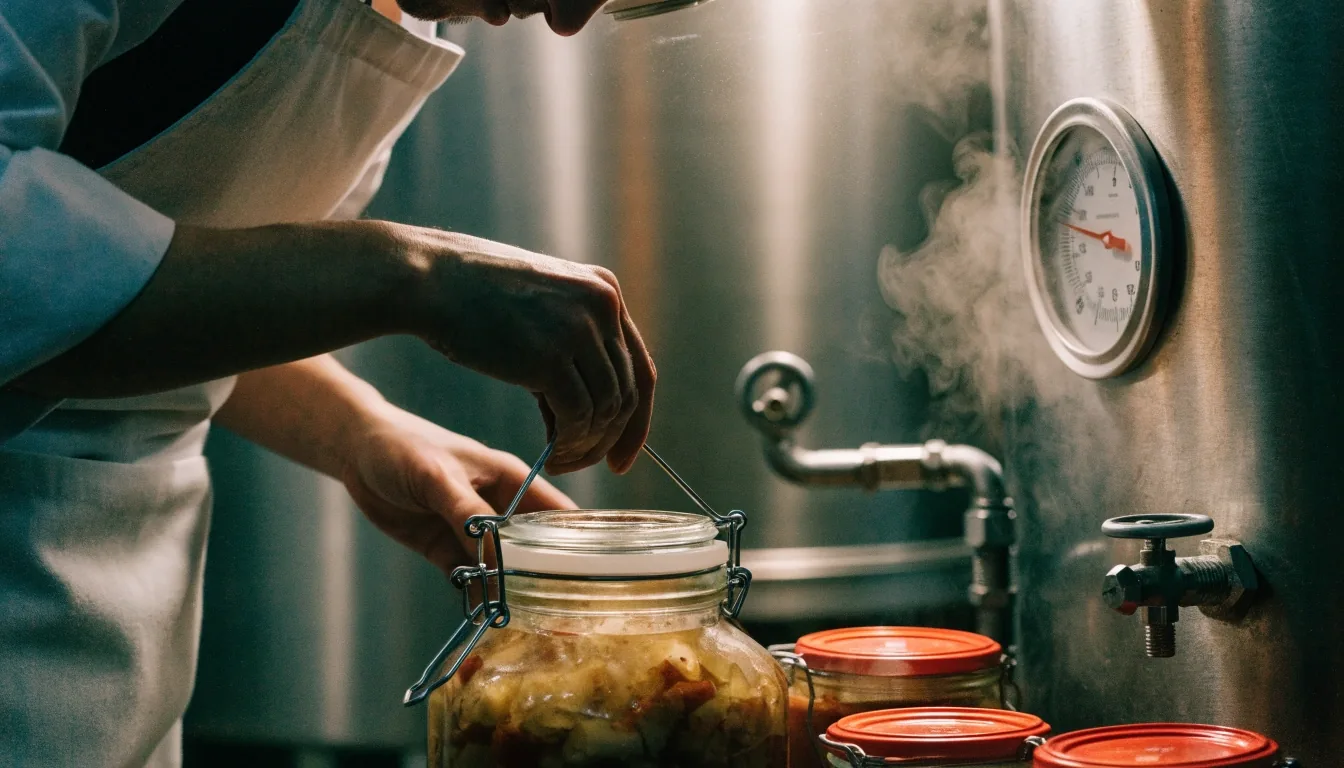
Pasteurisation removes living cultures from food. That single fact explains most of the confusion in this category, and both French brand material and reference pages state it plainly. An industrial jar of sauerkraut that has been heat-treated for shelf stability is still fermented in origin, but it is not a source of live microorganisms.
What the label tells you
Look for the words raw or unpasteurised. If neither appears and the jar sits on a warm shelf with a long best-before date, assume the cultures are no longer live.
What it still gives you
Taste, acidity and the practical job of preserving vegetables. A heat-treated ferment is not wasted food; it simply plays a different role on the plate.
Lacto-fermentation at home
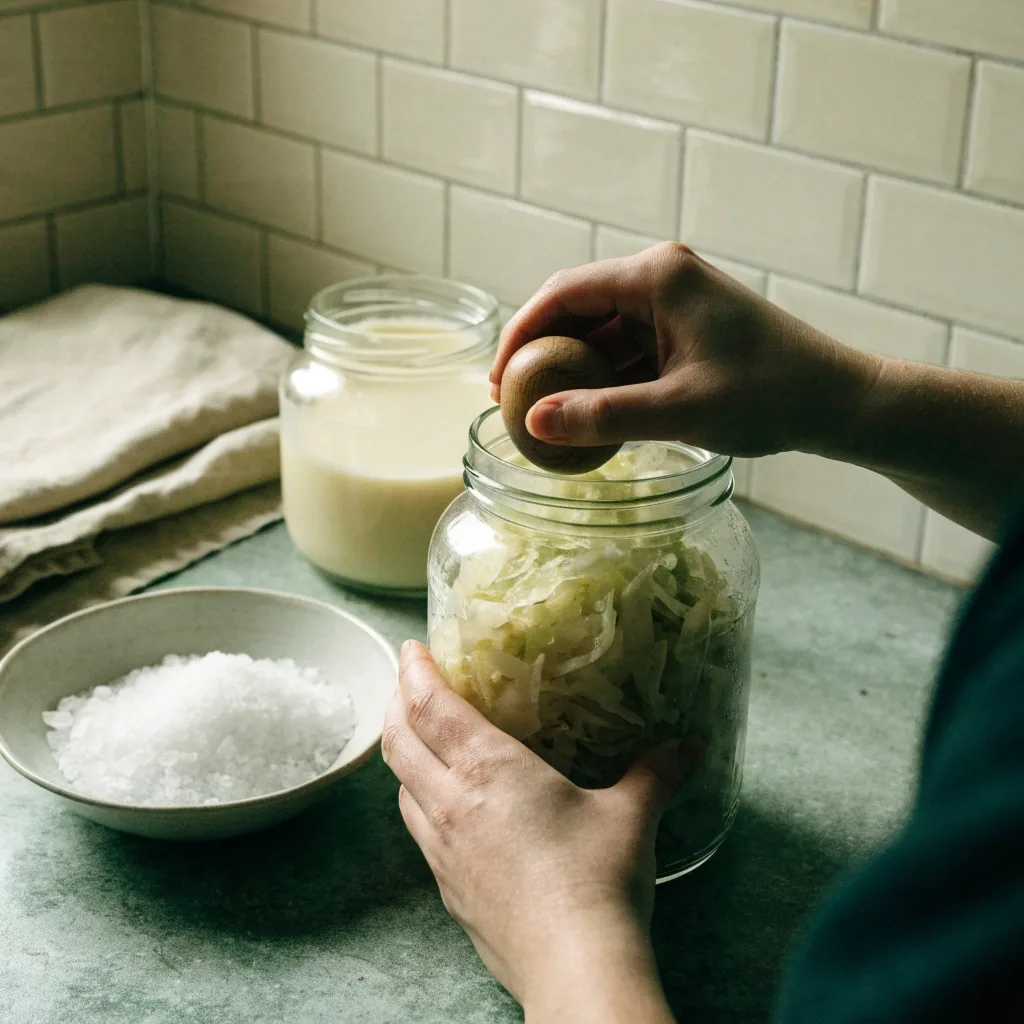
Lacto-fermentation is the salt-based method behind sauerkraut, kimchi and similar vegetable ferments. It needs salt, a clean jar and time, and it does not need special equipment. The two things that go wrong are contamination and inconsistent salt ratios, which is why most guides tell you to weigh the salt rather than estimate it by eye.
If you are new to it, a small batch of cabbage is the usual place to start. A litre jar keeps the risk low and the result easy to taste as it changes.
-
1
Weigh the salt
Salt controls which microorganisms can grow. Around two per cent of the vegetable weight is the common starting point, measured on a kitchen scale.
-
2
Press it under its own brine
Salt draws water out of the cabbage, and that liquid is the brine. Keep the vegetables submerged; anything above the surface is where mould starts.
-
3
Keep it cool and dark
Room temperature speeds the ferment up, a cooler corner slows it down. Both work; the cooler version usually tastes cleaner.
-
4
Taste as it goes
There is no fixed number of days. Start tasting after a few, then move the jar to the fridge when the acidity suits you.
Questions readers keep asking
Does yogurt count as a probiotic food?
Yogurt is fermented dairy and commonly contains live cultures, including Streptococcus thermophilus and Lactobacillus delbrueckii. Whether a specific product qualifies as a probiotic depends on the strain and the labelling, which is why fermented food and probiotic are not interchangeable terms.
Why does pasteurisation matter for fermented foods?
Pasteurisation removes living cultures, so a heat-treated product will not provide the same live microorganisms as a raw or unpasteurised version. Look for raw or unpasteurised on the label if that matters to you.
Should I choose fruit, vegetables or fermented drinks?
There is no rule. Vegetables and fruit cover the vitamin and mineral side; fermented foods cover the live-culture side. Most people end up using both rather than choosing between them.
Where do these foods sit in a French supermarket?
Yogurt and kefir sit with the chilled dairy. Raw sauerkraut and kimchi are near the chilled prepared vegetables. Miso and tempeh are usually in the world-food or organic aisle, and kombucha is often with the chilled soft drinks. The warm pickle shelf holds the heat-treated versions.
Keep reading, then decide what earns a place in your kitchen
The seasonal guide shows what is worth buying month by month in France, and the food library groups everyday items by the nutrients they are usually associated with. If a question is not answered here, write to the guide and we will point you to the page that covers it.
Skin Cleanse Rapid · 14 Rue de la Paix, 75002 Paris, France · +33 1 42 50 85 80 · [email protected] · Monday to Friday, 9:00 AM – 6:00 PM
This page is general food information. Fermented foods are everyday pantry items, not medicines, and this guide does not diagnose, treat or prevent any condition. If you have a health concern or take medication, speak to a qualified professional before changing your diet.